
The Leader of the Opposition, Hon. Joel Ssenyonyi, has raised concern over the continued depreciation of the Ugandan shilling against the US dollar, warning that the weakening currency is likely to increase the cost of doing business, particularly for importers who rely on foreign exchange to pay for goods and services.
Ssenyonyi alluded to the Central Bank Governor’s opinion during the House consideration of the Protection of Sovereignty law that sought to regulate and register agents of foreign interests, and control foreign funding to prevent external interference in national policy and politics.
‘We are going to have a substantial depreciation of the Uganda currency because of our balance of payments which are to be greatly destabilized by the sovereignty bill,’ Ssenyonyi quoted the Governor, Ating-Ego while appearing before the joint committee.
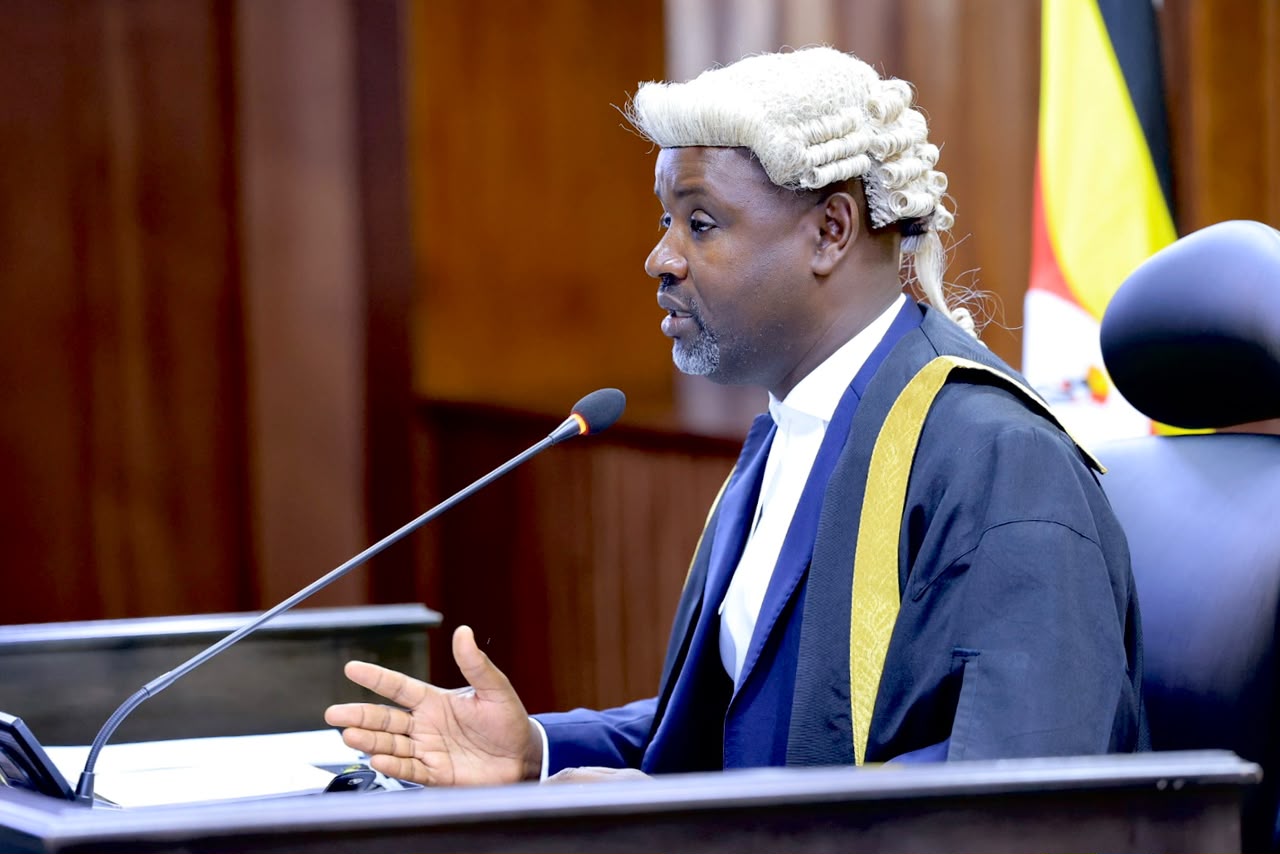
“It is important that government tells us what they are doing about this situation because it is biting hard,” Ssenyonyi said during House sitting on Tuesday, 06 October 2026.
The LOP also raised concerns about skyrocketing prices of fuel across the country, saying that fluctuating prices of a liter of petrol and diesel between Shs6,800 and Shs7,000 has become problematic to ordinary Ugandans.
“Government said Uganda National Oil Company is the sole importer of bulk petroleum products, and it would stabilise the prices of petroleum products. Because of the liberalized economy, retail prices are determined by oil marketing companies and that is why there could be a difference. But where it becomes problematic, it needs to be attended to,” he said.
He observed that high pump prices have impacted on the cost of living, including prices of food, clothes and payment of school fees, among other components.
Referring to the LOP’s concerns on the high cost of the dollar, Hon. Karim Masaba (Ind., Industrial Division, Mbale City) urged government to halt its monthly computation of taxes on imports based on the cost insurance and freight (CIF) on the value of imports.
He noted that traders expressed worry that the rise in the value of the dollar could increase the cost of taxes computed on their imported goods, by Uganda Revenue Authority (URA).
“Some of these goods have just arrived and some others are still in transit. The prayer of these traders is that URA and the Ministry of Finance hold on to the previous rate, because their goods were purchased at the older lower rate,” Masaba said.
He also expressed concern that even with an increment in national reserves to US$6.5 billion, the Central Bank was against using this to stabilize the value of the local currency but rather increase the cash reserve requirement by commercial banks.
“The Minister for Finance can explain to us why this move has been taken, because we would expect in such a situation, that these reserves would be used to stabilize the shilling such that many of our traders do not lose out,” Masaba added.
Hon. Cohen Amanya (NRM, Igara County West) also highlighted traders’ concerns that URA would move to declare their imports using the current rate of the shilling/dollar, yet their initial purchases were based on a lower rate.
“Yesterday we were told that the current rate is temporary, but as of today it has not changed and is still going up. This will affect the prices of fuel and factors of production. I beseech the Finance Minister to look into this issue,” said Amanya.
Bukimbiri County MP, Hon. Eddie Kwizera, urged government to establish a comprehensive tax policy that will guide revenue mobilisation.
The Deputy Speaker, Thomas Tayebwa, asked the Minister for Finance, Planning and Economic Development, and the Minister for Energy and Mineral Development, to give statements to the House on the cost of the dollar and pump prices respectively.